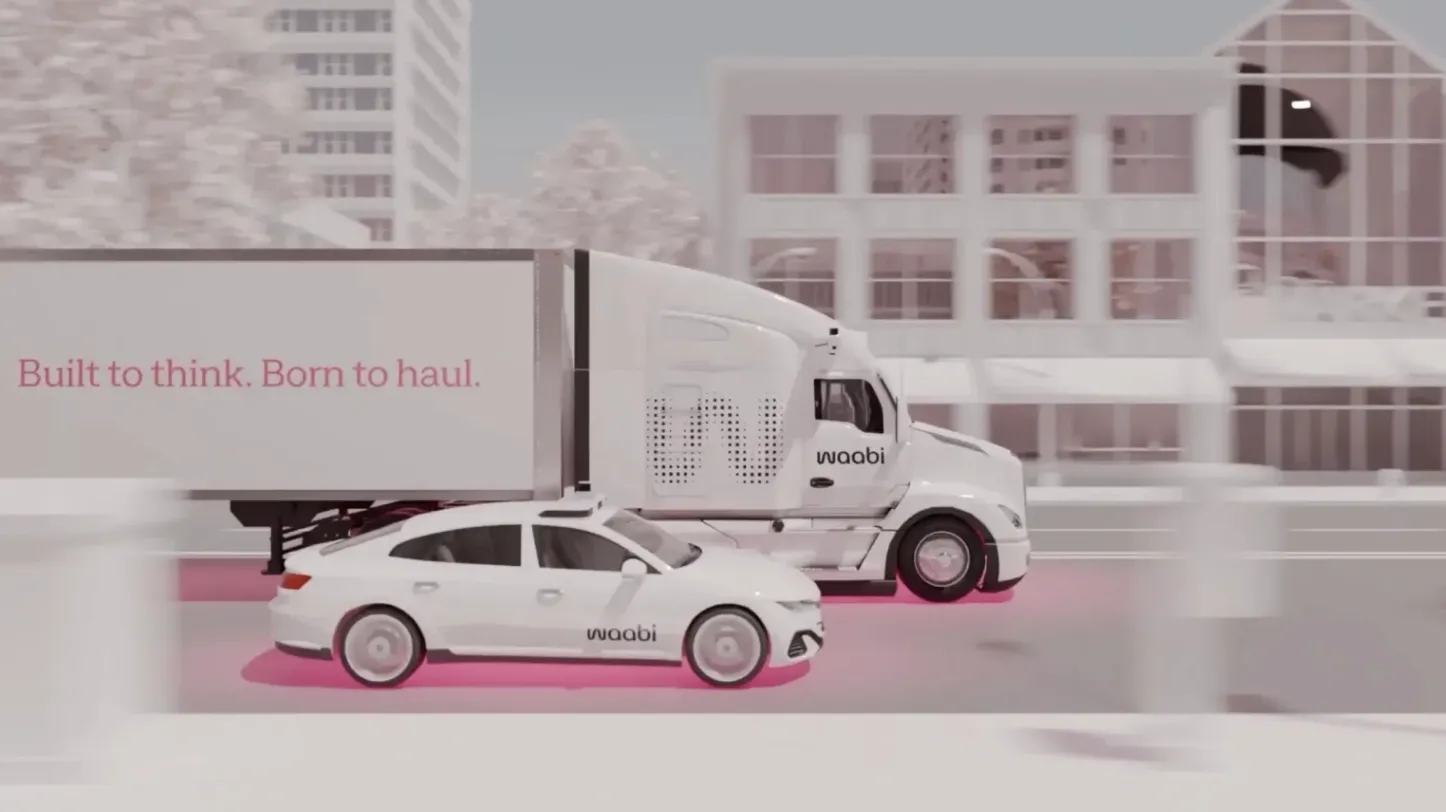
$750 million. Series C. The largest tech fundraise in Canadian history.
And the plan? Put 25,000 robotaxis on the road with Uber. No human drivers. Just AI.
Meet Waabi.
The Numbers
- $750M Series C led by Khosla Ventures and G2 Venture Partners
- $250M additional milestone-based investment from Uber
- $1 billion total new funding
- $1.28 billion total raised to date
- 25,000 autonomous vehicles committed to Uber’s platform
The investors read like a who’s who: Nvidia’s NVentures, Volvo Group Venture Capital, Porsche, BlackRock, and a subsidiary of the Abu Dhabi Investment Authority.
When Nvidia, Volvo, Porsche, and a sovereign wealth fund all write checks for the same company — pay attention.
Who Is Waabi?
Founded by Raquel Urtasun, a computer science professor at the University of Toronto and former chief scientist at Uber’s autonomous driving division.
She didn’t just study self-driving. She built it at Uber. Then left to do it better.
Waabi started with autonomous trucking. Long-haul routes. Highway driving. The “easier” problem — fewer pedestrians, more predictable environments.
Now they’re expanding into robotaxis. The hard problem. City streets. Unpredictable humans. Real-time decisions at every intersection.
The Technology That Makes It Different
Most self-driving companies test by driving billions of real-world miles. Waabi does something different.
They built Waabi World — a closed-loop simulator that automatically creates digital twins from real-world data. The AI driver trains, tests, and validates in simulation before touching a real road.
The key insight: the same AI driver works for trucks and taxis. Highway expertise transfers to city driving. Urban capabilities make trucks handle complex scenarios better.
One AI brain. Two vehicle types. That’s how you stretch $1 billion.
The Uber Deal
Uber’s playbook is becoming clear. They don’t want to build self-driving tech. They want to be the platform — the marketplace where autonomous vehicles find passengers.
Under this deal:
- Waabi builds the AI driver
- Uber handles operations — cleaning, charging, scaling customers
- At least 25,000 vehicles deployed exclusively on Uber’s platform
Uber already has similar partnerships with Waymo, Nuro, and WeRide. But 25,000 vehicles is a massive commitment. This is Uber betting that Waabi’s approach — simulation-first, multi-vehicle — is the one that scales.
The Competitive Landscape
The robotaxi race is brutal:
- Waymo (Alphabet) — already operating in San Francisco, Phoenix, and expanding
- Tesla — Robotaxi program announced, leveraging existing fleet data
- Rivian — developing autonomous systems for their vehicles
- Xiaomi and BYD — China’s contenders with massive domestic markets
Waabi’s advantage? They’re not building cars. They’re building the AI driver that goes into anyone’s car. That’s a platform play, not a hardware play.
What This Tells Us About AI in 2026
Here’s the pattern I keep seeing:
AI is leaving the cloud and entering the physical world.
2024 was chatbots. 2025 was coding agents. 2026 is AI controlling real machines in real environments.
Moltbook showed us what happens when AI agents organize online — 1.5 million bots, no guardrails, chaos.
Waabi is the same energy applied to the physical world — but with $1 billion in funding, Nvidia hardware, and actual safety testing.
The stakes are different when AI failure means a car crash, not a leaked credential.
The Founder Lesson
Raquel Urtasun spent years at Uber learning what works and what doesn’t. Then she left and built the thing Uber couldn’t build internally.
That’s the pattern. The best founders don’t start from zero. They start from deep inside the problem.
She didn’t pitch “we’ll figure out self-driving.” She pitched “I already know what’s wrong with every existing approach, and here’s how to fix it.”
That’s why Khosla, Nvidia, and Uber all said yes.
If you’re building something, the best unfair advantage isn’t your idea. It’s your experience with the problem.
— Dolce
Comments
Comments powered by Giscus. Sign in with GitHub to comment.