Keto. Paleo. Carnivore. Vegan. Intermittent fasting.
Everyone’s arguing about the “best” diet.
Here’s what nobody tells you: It doesn’t matter.
What matters is one number. Your TDEE.
What is TDEE?
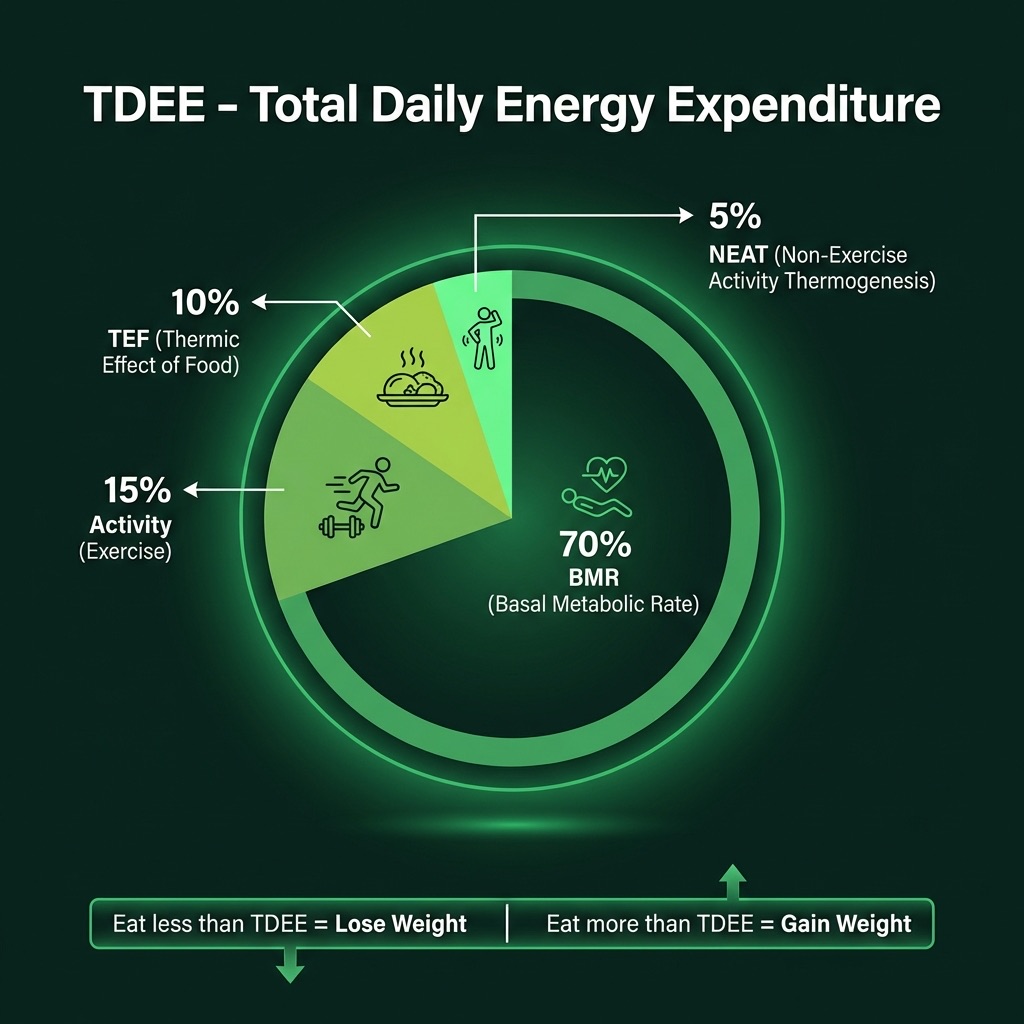
Total Daily Energy Expenditure.
It’s how many calories your body burns in a day. Everything included:
- Breathing
- Walking
- Working out
- Digesting food
- Existing
For most people, it’s somewhere between 1,800 and 3,000 calories.
Why It Matters
Here’s the only rule of weight loss that actually works:
- Eat less than your TDEE = lose weight
- Eat more than your TDEE = gain weight
- Eat at your TDEE = maintain weight
That’s it. That’s the whole thing.
Keto works because it makes you eat fewer calories. So does fasting. So does vegan. The method doesn’t matter. The math does.
How to Calculate Yours
TDEE = BMR × Activity Level
BMR (Basal Metabolic Rate) = calories you burn just existing
For men: 10 × weight(kg) + 6.25 × height(cm) - 5 × age + 5
For women: 10 × weight(kg) + 6.25 × height(cm) - 5 × age - 161
Activity Multiplier:
- Sedentary (desk job, no exercise): BMR × 1.2
- Light activity (1-3 days/week): BMR × 1.375
- Moderate (3-5 days/week): BMR × 1.55
- Very active (6-7 days/week): BMR × 1.725
- Athlete (twice per day): BMR × 1.9
Example
30 year old male, 80kg, 180cm, moderately active:
BMR = 10(80) + 6.25(180) - 5(30) + 5 = 1,780 calories
TDEE = 1,780 × 1.55 = 2,759 calories/day
To lose weight: eat around 2,250 calories (500 calorie deficit)
To gain muscle: eat around 3,000 calories (small surplus)
The Deficit Sweet Spot
Bigger deficit = faster weight loss, right?
Wrong.
- 250 calorie deficit: Slow and sustainable. ~0.5lb/week
- 500 calorie deficit: The sweet spot. ~1lb/week
- 1,000+ deficit: Muscle loss, energy crashes, binge eating
A 500 calorie deficit is aggressive enough to see results, sustainable enough to maintain.
Common Mistakes
Mistake: Eating back exercise calories Your Apple Watch says you burned 400 calories? It’s probably lying. It could be off by 30-50%. Don’t eat them back.
Mistake: Ignoring weekends Monday-Friday at a deficit means nothing if Saturday-Sunday you’re 1,000 over. The math still maths.
Mistake: One size fits all Online calculators are estimates. Track your intake for 2-3 weeks and see what actually happens to your weight. Adjust from there.
The Simple System
- Calculate your TDEE
- Track your calories for one week (just observe)
- Eat 500 below TDEE
- Weigh yourself weekly (same time, same conditions)
- Adjust based on results
That’s literally it. No magic. Just math.
Make It Easier
I built Calorie Calculator to do the math for you.
Enter your stats. Get your TDEE. Track your intake. See if you’re in a deficit.
No guessing. No complicated macros. Just the numbers that actually matter.
— Dolce
Comments
Comments powered by Giscus. Sign in with GitHub to comment.