Every January, people set goals.
By February, most have quit.
It’s not because they’re lazy. It’s because they’re using a broken system.
Here’s what actually works.
Why Goals Fail
Problem 1: Goals are outcomes, not systems
“Lose 20 pounds” is an outcome. “Go to gym 3x/week” is a system.
You don’t control outcomes. You control actions.
Every goal should be converted to behaviors you can execute daily or weekly.
Problem 2: Motivation fades fast
You set the goal when you felt motivated.
Day 14, motivation is gone. Now what?
Relying on motivation is planning to fail. You need structure that works without motivation.
Problem 3: No feedback loop
You set a goal in January. Check in again in… December?
Too long. Zero visibility into whether you’re on track.
Weekly feedback loops keep you honest and allow course correction.
The Science-Backed Framework
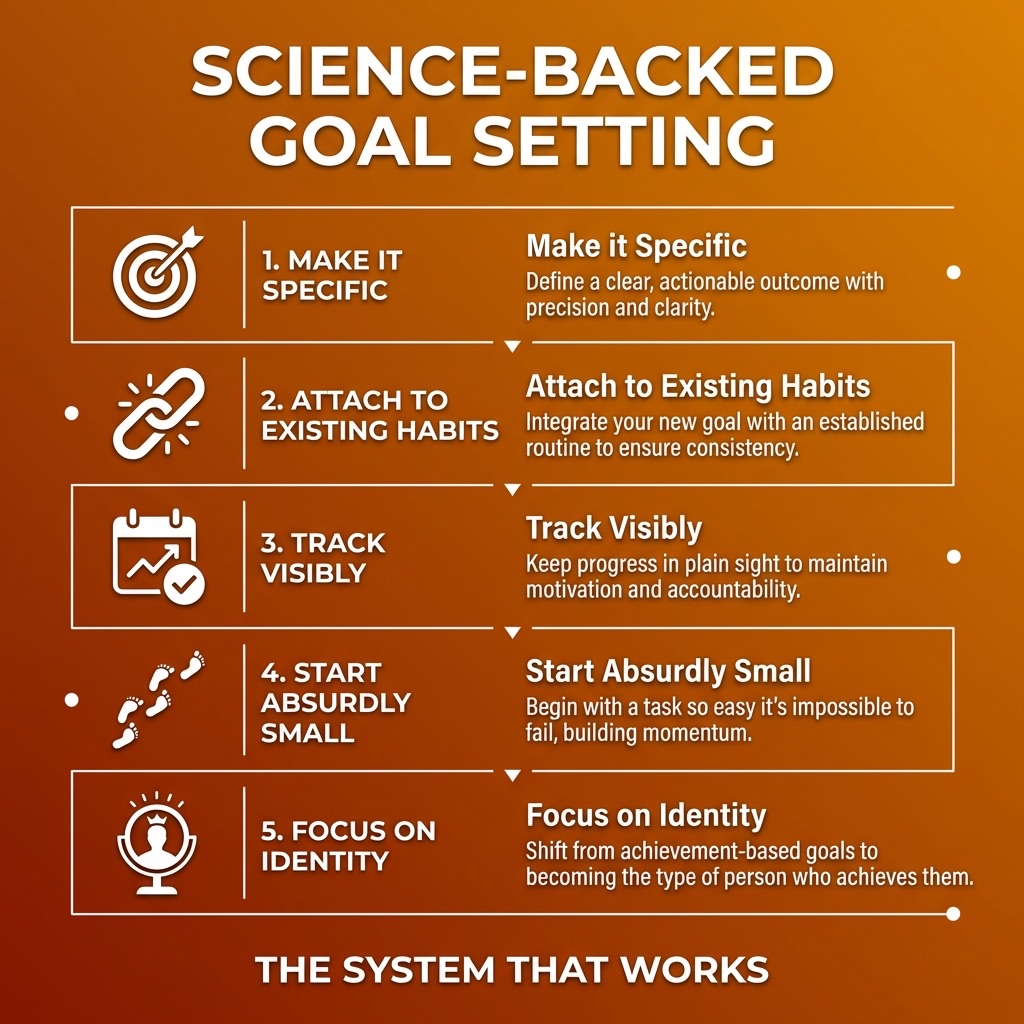
1. Make it specific
Bad: “Read more” Good: “Read 20 pages every day”
Bad: “Get in shape” Good: “Strength train 3x/week for 45 minutes”
Vague goals produce vague results. Be specific about what, when, and how much.
2. Attach to existing habits
This is called habit stacking.
Instead of “I’ll meditate,” try “After my morning coffee, I’ll meditate for 5 minutes.”
The existing habit (coffee) becomes the trigger for the new one.
3. Track visibly
Jerry Seinfeld’s “don’t break the chain” method works.
Put a calendar on your wall. Mark an X every day you do the thing. The visual chain motivates you to keep going.
Digital version: streak tracking in an app.
4. Make failure obvious
If you’re tracking, you can’t lie to yourself.
Missed 3 days? It shows. That visibility creates accountability.
No tracking = easy to pretend you’re doing better than you are.
5. Start absurdly small
The goal isn’t to do a lot. The goal is to not miss.
- Want to meditate? Start with 1 minute.
- Want to exercise? Start with 5 push-ups.
- Want to read? Start with 1 page.
Small enough that you can do it even on your worst day. Build the habit first. Increase volume later.
6. Focus on identity, not outcomes
“I’m trying to lose weight” vs. “I’m someone who takes care of their body.”
The first is a temporary project. The second is who you are.
Identity-based goals are more durable. You’re not fighting yourself — you’re being yourself.
The System in Practice
| Goal | System | Tracking |
|---|---|---|
| Lose weight | Track calories + gym 3x/week | Daily streak |
| Read more | 20 pages/day after dinner | Daily streak |
| Learn Spanish | 15 min Duolingo after lunch | Daily streak |
| Sleep better | Phone down at 9pm | Daily streak |
Notice the pattern: specific behavior + consistent time + visible tracking.
The Tool
I built SimpleStreaks because tracking is the key to everything.
Add your habits. Check them off. Watch the streak grow.
No complexity. No gamification. Just accountability.
Because the best goal system is the one you actually use.
— Dolce
Comments
Comments powered by Giscus. Sign in with GitHub to comment.